Homeowners' pick for appliance repair across the West
Microwave Repair — Book a Visit Today
We repair microwaves that won't heat, spark, ignore the keypad, or run the fan forever, and the fix starts with a phone call describing the symptom. Most of those traces back to a magnetron, a high-voltage diode or capacitor, a door interlock switch, or a control board that has taken one too many power flickers. Our visit starts with the failure you describe, then moves to testing. High-voltage parts get discharged before anything else happens. We tell you what we found and what the repair looks like, including when a unit is not worth opening again. Over-the-range, countertop, built-in, microwave-oven combos. Call us and describe what it is doing.
Call (800) 712-6387- A real person answers
- Open 7 days
- Written quote before work starts
Taking calls until 5:00 PM MT
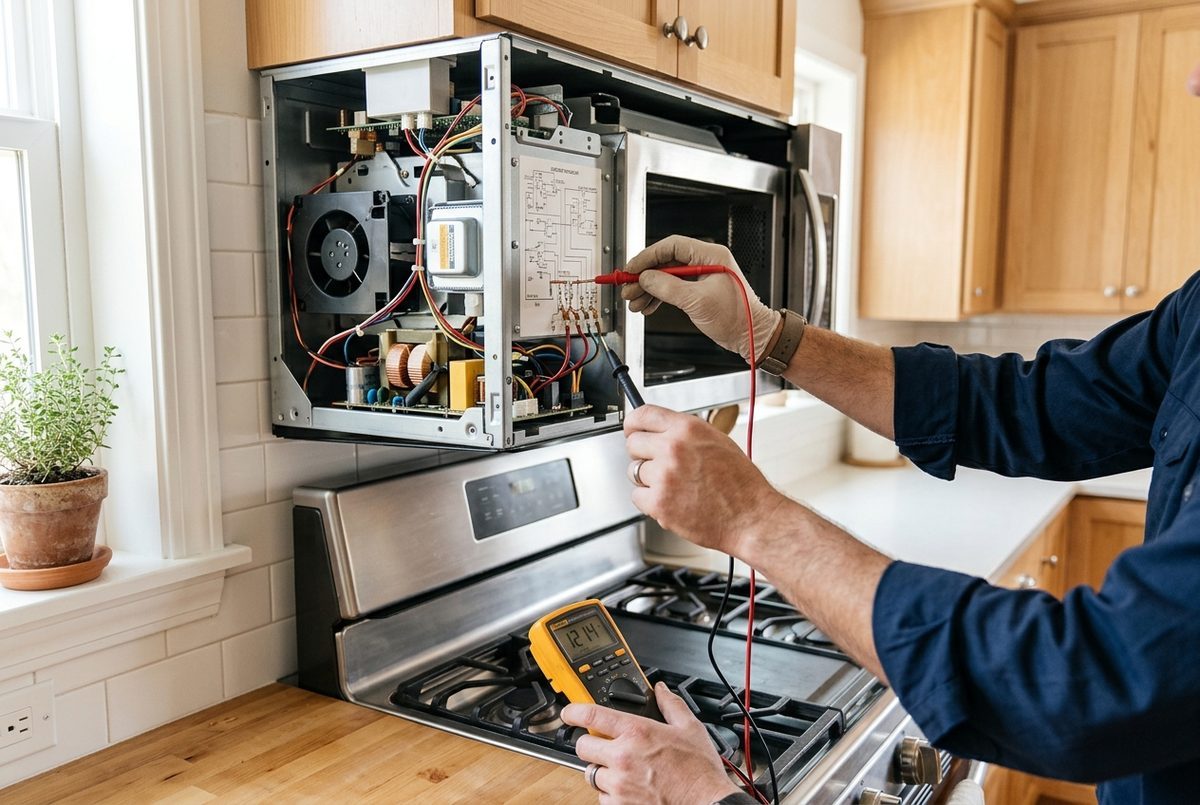
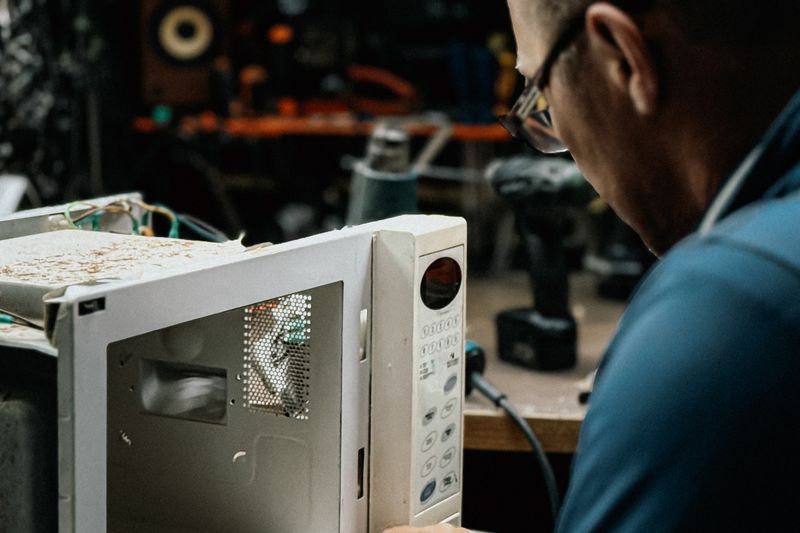
The microwave symptoms we hear most
- "It runs but my food stays cold" Magnetron, high-voltage diode, or capacitor failure. The cook circuit is dead while the fan and light still work.
- "There are sparks and a burning smell inside" Arcing off a damaged waveguide cover, burnt cavity paint, or metal debris. Stop using it until someone inspects it.
- "Nothing happens when I shut the door" The door latch assembly or one of the interlock switches has failed, and that cuts power to the cook circuit by design.
- "Half the buttons don't respond" Membrane keypad wear or a failing control board, common after years of steam and grease sitting on the panel.
- "The fan won't shut off" A thermostat, cooling fan relay, or control board fault, sometimes set off by a blocked vent above the range.
Safe things to check first
Worth a look before you call — sometimes it saves you the visit.
- 1Plug the microwave into a different outlet, or reset the breaker, to rule out lost power at the wall.
- 2Open and close the door firmly and look for a cracked latch, a bent hinge, or a door that no longer sits flush.
- 3Check the waveguide cover on the cavity wall for scorch marks or holes, and stop using the unit if you see them.
- 4 Clear the grease filters and the vent above an over-the-range unit so hot air is not recirculating.
Guides & troubleshooting
What homeowners get from an independent shop
| Atlas Appliance Service | Big-box repair chains | Handyman listings | |
|---|---|---|---|
| You approve a written quote first | ✓ | ✕ | ✕ |
| Phones answered by people, every day | ✓ | ✕ | ✓ |
| Gas and electric, all major brands | ✓ | ✓ | ✕ |
| Independent shop, nobody's quota | ✓ | ✕ | ✓ |
| Techs who know the local housing | ✓ | ✕ | ✓ |
What homeowners say after the visit
“Booked for the washer, and he also tightened the dryer door latch without being asked. No extra line item.”
May L.Peoria, AZ“Old house, old wiring, cranky range. The tech worked around all of it without complaining once.”
Herb W.Eugene, OR“They said morning, they meant morning. The quote said one number, the card ran that number.”
Faye D.Tempe Junction, AZMicrowave Repair — quick answers
Is a microwave that won't heat worth repairing?
Sometimes. On a built-in or over-the-range unit, replacing a magnetron or diode often makes sense because the cabinet opening is a fixed size. On a small countertop model, we will tell you honestly when replacement is the more sensible path.
Why can't I take the cover off myself?
The high-voltage capacitor can hold a dangerous charge long after the unit is unplugged. It has to be discharged with the right tool before anyone touches the internals. That is the main reason microwaves are not a DIY appliance.
Do you work on over-the-range and built-in models?
Yes. Those need careful removal from the mounting plate or cabinet, usually with a second set of hands. We support the unit, service it, and remount it level so the door seals against the frame again.
What brands do you service?
We are an independent repair company and work on all major brands of residential microwave. Parts sourcing varies by model and age, so have the model number ready when you call us and we will talk through availability.
My microwave sparked once, then seemed fine. Should I still call?
Call. A single arc usually means the waveguide cover or cavity liner is compromised, and the damage grows each time you run it. Keep the unit unplugged until it has been looked at.
Can a power outage break the control board?
It can. Surges and brownouts are hard on the electronics, and a board that survived the first flicker may fail on the next. If your display is scrambled or dead after an outage, that is the usual suspect.
How it works
- Step 1
Tell us the symptom
Call us or fill out the form and describe what you hear, smell, or see. A noise, a leak, an error code, the smell of something burning. Small details help us load the right parts on the van before we head out.
- Step 2
We come look
A technician comes to your home and tests the machine instead of guessing at it. You'll hear what failed, what the fix takes, and what we'd do if this were our own kitchen.
- Step 3
Repair and check
A lot of parts ride with us, so common failures get handled on the same visit. Harder parts we order in. Then we run the appliance through a cycle and make sure the problem is actually gone.
- A real person answers
- Open 7 days
- Written quote before work starts
Why homeowners call us
- Western conditions, plainlyHard well water scales up dishwasher jets and water heater lines. Summer heat leans on refrigerator compressors. Cold garages freeze washer valves in winter. We see those patterns weekly, so we check for them before chasing something exotic.
- Brand independentWe aren't tied to any manufacturer. That means we work on the mixed lineup most homes actually have: one brand of range, another brand of laundry, a fridge somebody bought used. Same technician, same visit.
- Steady, not rushedRushing is how a diagnosis goes wrong. We take the time to pull the panel, test the part, and read the board. And if a repair doesn't make sense for the age of the machine, we'll say so out loud.
- Straight schedulingYou get a real appointment window and a heads-up when the technician is on the way. Rural addresses and long mountain driveways are normal for us. Tell us about the gate or the gravel and we'll plan for it.
- All major brands, gas & electricIndependent service on Whirlpool, LG, Samsung, GE, Maytag, Bosch, KitchenAid and the rest.
- Straight answersSome machines aren't worth the part, and we say so before you spend anything.
Microwave Repair
Small faults become big ones on a schedule of their own
Describe the symptoms and we'll book the visit — takes about a minute.
- A real person answers
- Open 7 days
- Written quotes
- All major brands
- Gas & electric
Rather not call? Get a free quote →