Homeowners' pick for appliance repair across the West
Dryer Vent Cleaning & Repair — Book a Visit Today
We clean dryer vents from the dryer all the way to where the duct leaves the house, and we test the airflow at the exit before we pack up. Lint doesn't stay in the trap. It rides the vent, sticks to the ridges of flex duct, and packs tight at the elbows. Add a crushed hose behind the dryer or a roof cap frozen shut in January, and the air stops moving. Clothes come out damp, the cabinet runs hot, and fire risk climbs. We brush and vacuum the full run, check the flap, and replace hose or damaged duct sections when those turn out to be the problem. Call us and tell us how long a load takes now versus last year.
Call (800) 712-6387- A real person answers
- Open 7 days
- Written quote before work starts
Taking calls until 5:00 PM MT
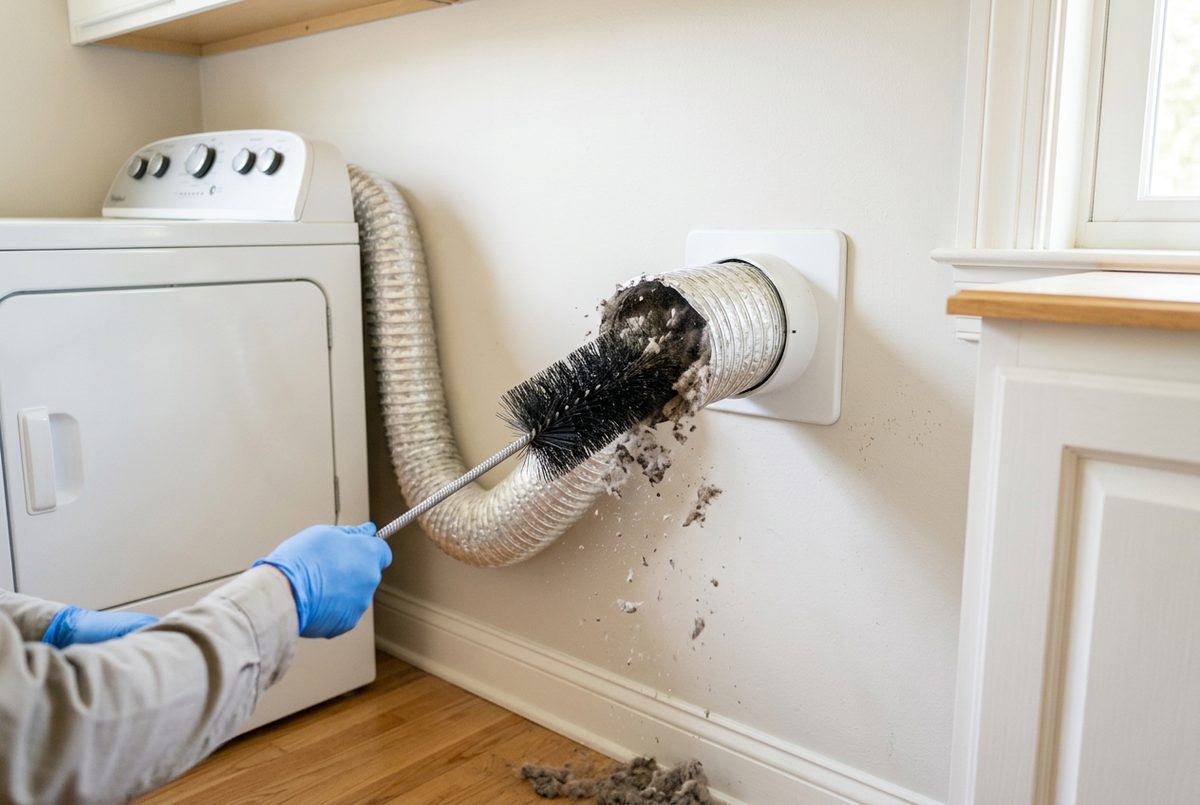
The dryer vent cleaning & symptoms we hear most
- Takes three cycles to dry one load of towels Restricted vent run, packed lint at elbows or a long duct
- The laundry room feels like a sauna Vent disconnected behind the dryer or leaking at a joint
- Burning smell when the dryer runs Lint against the heating element or scorching inside the duct
- Dryer shuts off partway through and won't restart right away Thermal cutoff tripping because exhaust airflow is blocked
- Outside flap never opens anymore Clogged termination cap, bird nest, or crushed exterior duct
Safe things to check first
Worth a look before you call — sometimes it saves you the visit.
- 1Pull the lint screen, clean it, then hold it under running water and see whether a fabric softener film is blocking the mesh.
What homeowners get from an independent shop
| Atlas Appliance Service | Big-box repair chains | Handyman listings | |
|---|---|---|---|
| You approve a written quote first | ✓ | ✕ | ✕ |
| Phones answered by people, every day | ✓ | ✕ | ✓ |
| Gas and electric, all major brands | ✓ | ✓ | ✕ |
| Independent shop, nobody's quota | ✓ | ✕ | ✓ |
| Techs who know the local housing | ✓ | ✕ | ✓ |
What homeowners say after the visit
“Freezer frost was an inch thick. He fixed the heater, explained the airflow, and the frost never came back.”
Ellen D.Peoria, AZ“Honest about what they could not fix, which made me believe everything else they said.”
Marcus L.Eugene, OR“Washer would not drain with a load of soaked towels inside. They moved the visit up when I explained.”
Judy P.Tempe Junction, AZDryer Vent Cleaning & Repair — quick answers
How often should a dryer vent be cleaned?
Once a year suits most households. Go more often if you dry several loads a day, own a long duct run, have pets that shed, or the vent exits through a roof. Damp clothes after a normal cycle are your real signal.
Can I just use a shop vac from behind the dryer?
A shop vac pulls the first few feet. Packed lint usually sits farther out, at bends or near the exterior cap. Rotary brush rods travel the whole run and knock that material loose so it can be captured instead of pushed deeper.
Is flexible foil duct a problem?
Ridged flex duct catches lint on every fold, and it sags or kinks easily behind a dryer. Rigid or semi-rigid metal moves air better and stays cleaner. When we find crushed flex, we talk through swapping that section.
My vent goes up through the roof. Does that change things?
Longer vertical runs work the dryer harder, and lint settles back down once the blower stops. Roof caps collect nests and snow too. We clean from both ends when access allows, and we check that the flap swings freely.
Why does my vent clog again so quickly?
Repeat clogging points at something structural. A run that's too long, too many elbows, a screen over the exit, or a crushed section inside a wall. We look for the cause instead of clearing the same blockage twice.
Can a blocked vent damage the dryer itself?
Yes. Trapped heat stresses the thermostat, thermal fuse, and heating element. Plenty of no-heat calls trace back to a vent nobody cleaned. Clearing the airflow protects parts you'd otherwise be replacing.
How it works
- Step 1
Tell us the symptom
Call us or fill out the form and describe what you hear, smell, or see. A noise, a leak, an error code, the smell of something burning. Small details help us load the right parts on the van before we head out.
- Step 2
We come look
A technician comes to your home and tests the machine instead of guessing at it. You'll hear what failed, what the fix takes, and what we'd do if this were our own kitchen.
- Step 3
Repair and check
A lot of parts ride with us, so common failures get handled on the same visit. Harder parts we order in. Then we run the appliance through a cycle and make sure the problem is actually gone.
- A real person answers
- Open 7 days
- Written quote before work starts
Why homeowners call us
- Western conditions, plainlyHard well water scales up dishwasher jets and water heater lines. Summer heat leans on refrigerator compressors. Cold garages freeze washer valves in winter. We see those patterns weekly, so we check for them before chasing something exotic.
- Brand independentWe aren't tied to any manufacturer. That means we work on the mixed lineup most homes actually have: one brand of range, another brand of laundry, a fridge somebody bought used. Same technician, same visit.
- Steady, not rushedRushing is how a diagnosis goes wrong. We take the time to pull the panel, test the part, and read the board. And if a repair doesn't make sense for the age of the machine, we'll say so out loud.
- Straight schedulingYou get a real appointment window and a heads-up when the technician is on the way. Rural addresses and long mountain driveways are normal for us. Tell us about the gate or the gravel and we'll plan for it.
- All major brands, gas & electricIndependent service on Whirlpool, LG, Samsung, GE, Maytag, Bosch, KitchenAid and the rest.
- Straight answersSome machines aren't worth the part, and we say so before you spend anything.
Dryer Vent Cleaning & Repair
Small faults become big ones on a schedule of their own
Describe the symptoms and we'll book the visit — takes about a minute.
- A real person answers
- Open 7 days
- Written quotes
- All major brands
- Gas & electric
Rather not call? Get a free quote →